By Supreme Carpet Cleaning of San Joaquin County · March 11, 2026 · 7 min read
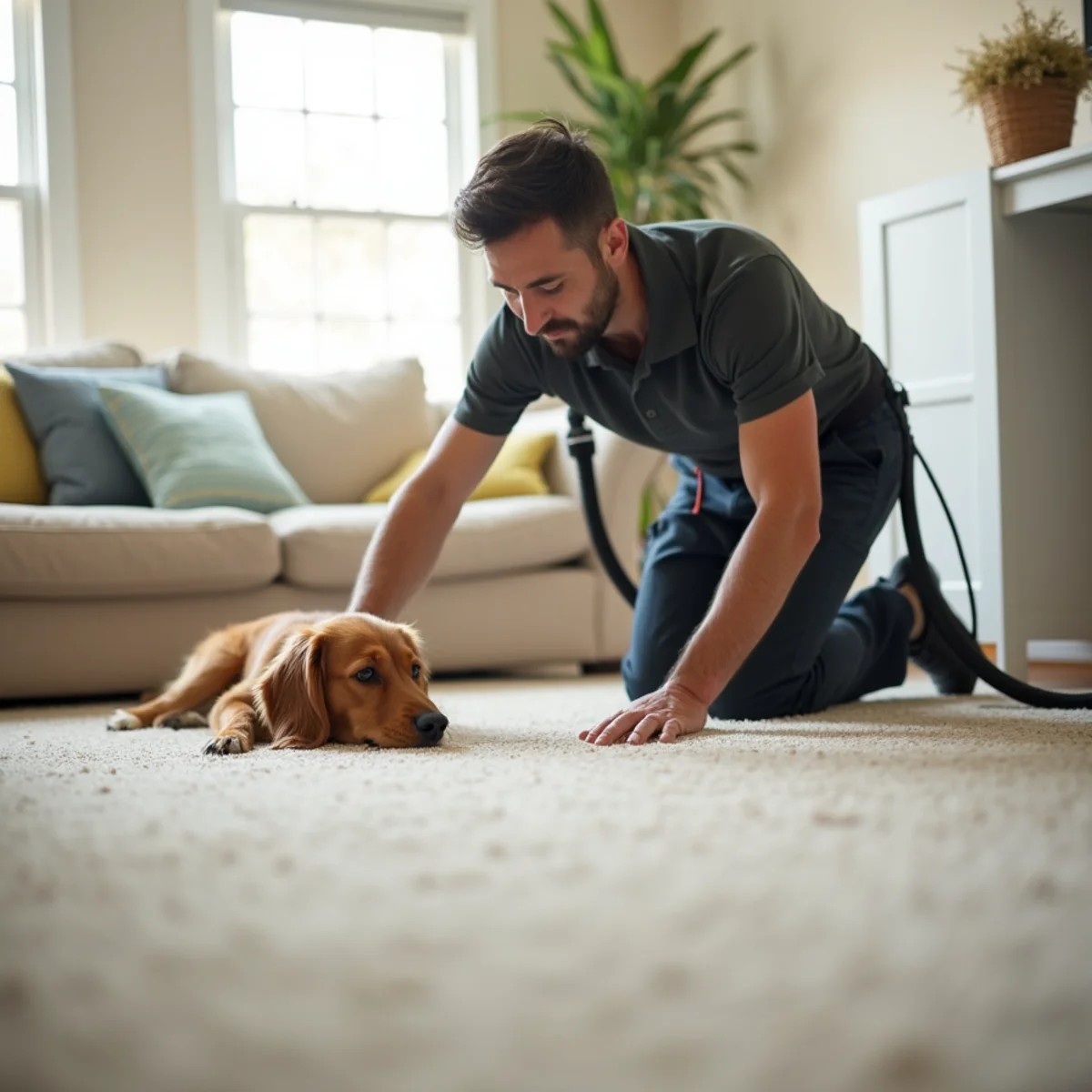
You love your dog or cat — you just don't love the smell they leave in the carpet. And if you've cleaned the spot only to have the odor drift back a few days later, you're not doing anything wrong. Pet odor is one of the most stubborn problems in any home because of where it hides. Here's why it keeps coming back and what actually clears it for good, the way we handle it for pet-heavy households across San Joaquin County.
Why pet odor keeps coming back
Urine soaks into the pad and subfloor
When a pet has an accident, the liquid doesn't stay on top of the carpet. It soaks straight through the fibers into the pad underneath — and sometimes into the subfloor. When you clean the surface, the source is still down there. As humidity rises, the odor reactivates and wafts back up. That's why surface cleaning alone never fully wins.
Surface sprays only mask the smell
Most store-bought deodorizing sprays are designed to cover the odor with a stronger scent, not remove its source. For a day or two the room smells like flowers; then the pet smell comes right back through. You end up chasing it with more spray instead of dealing with what's actually causing it.
First response: what to do right after an accident
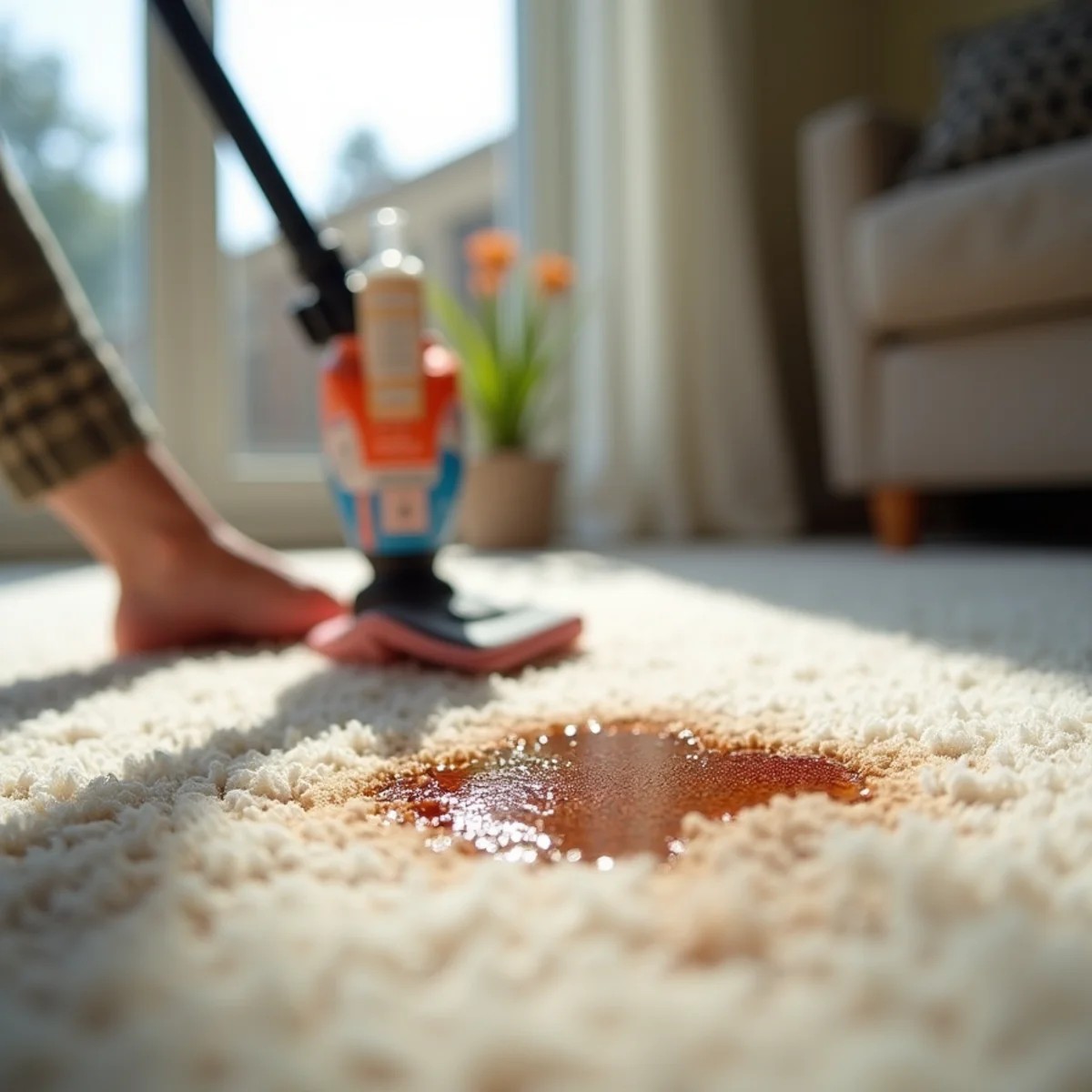
Speed matters. The faster you act, the less soaks into the pad. Blot up as much liquid as you can with clean cloths or paper towels, pressing down firmly and working from the edges in. Rinse the area lightly with cool water and blot again. Don't scrub, and don't reach for a heavy chemical — just get the moisture out quickly.
Home remedies — what helps a little, what doesn't
Enzyme cleaners
Enzyme cleaners are the one home product genuinely worth using. They break down the compounds in pet urine that cause odor, rather than masking them. They can help on fresh, shallow accidents — but if the urine has already reached the pad, a store-bottle amount usually can't penetrate deep enough to reach all of it.
Baking soda and vinegar myths
Baking soda can absorb a little surface odor, and vinegar can help on a fresh, minor spot. But neither reaches urine that's soaked into the pad, and vinegar's own smell can linger. They're fine as a stopgap — just don't expect them to solve a set-in odor. That takes reaching the source.
How professionals treat set-in pet odor
Locating the source, treating below the surface, thorough extraction
Professional pet odor treatment works because it addresses where the odor actually lives:
- Locate the affected areas, including spots you can't see.
- Apply professional pet-safe treatments that break down the odor source, not just mask it.
- Treat below the surface where the urine reached the pad.
- Extract thoroughly with truck-mounted hot water extraction and dry fast.
This is why our pet homes in Spanos Park West and Morada see accidents that had been there for months come out looking and smelling brand new — we treat the source, not the symptom, with eco-friendly solutions that are safe for the pets living there.
Preventing the next accident from becoming a permanent smell
You can't prevent every accident, but you can keep them from becoming permanent. Act fast, blot thoroughly, keep an enzyme cleaner on hand, and schedule a professional treatment for anything that soaked in deep. The quicker a fresh accident is handled, the less likely it turns into a recurring odor.
When it's time to call in a pro
If the smell keeps coming back after you clean, if there are multiple or older accidents, or if you just want it gone for good, it's time for professional treatment. It's backed by our 100% satisfaction guarantee — if you're not happy, we re-clean.
You can't spray your way out of pet odor. The only way to win is to treat it where it actually lives — below the surface.
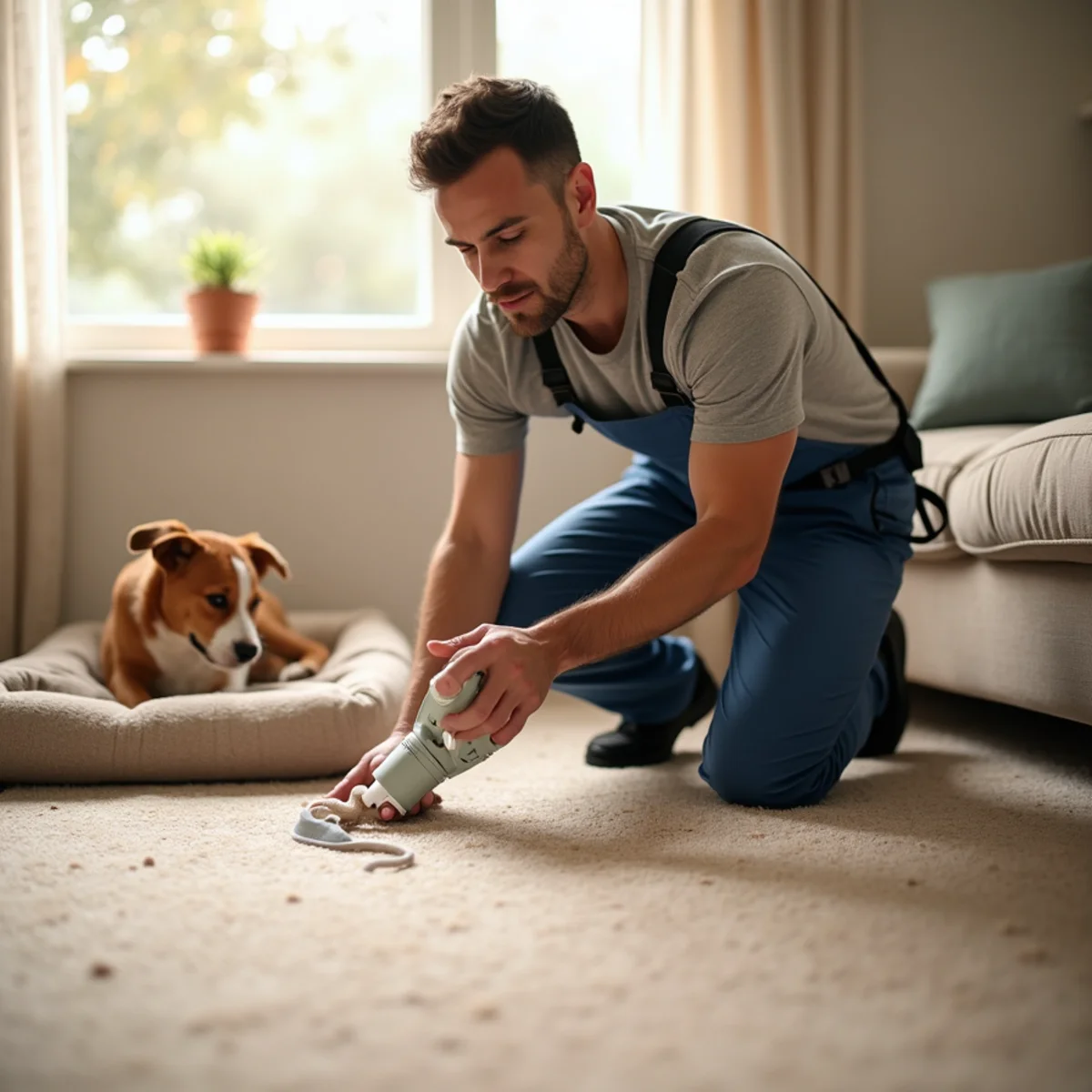
Once you understand why pet odor is so stubborn at a chemical level, everything about removing it makes more sense — including why the smell can be gone for weeks and then roar back on a muggy morning. This section goes beneath the surface: the crystals that cause the problem, how to find accidents you can't even see, why cat urine is a different beast than dog urine, and the honest point at which cleaning stops and replacement begins. It's the depth we bring to pet-heavy homes across Stockton and San Joaquin County.
The real culprit: uric acid crystals that water can't dissolve
Pet urine isn't one substance — it's a mix of urea, ammonia, bacteria, and uric acid. The first three rinse away fairly easily, which is why a fresh accident seems to clean up fine. The trouble is the uric acid. As urine dries, the uric acid forms tiny crystals that bond tightly to the carpet fibers, the backing, and the pad. Those crystals are essentially insoluble in water, so ordinary cleaning — and even plain hot water — moves right past them and leaves them behind. That's the missing piece most homeowners never hear: you can clean the spot thoroughly and still leave the odor source fully intact.
This is also why the smell seems to have a mind of its own. Uric acid crystals are hygroscopic, meaning they pull moisture out of the air. On a humid Central Valley evening, after a rainy stretch, or when the summer swamp cooler kicks in, those dormant crystals rehydrate and release a fresh wave of odor gas. The smell didn't come back — it never actually left. It was just waiting for humidity. Breaking those crystals apart is the entire game, and it takes enzymes, not scent.
Local tip: If your pet odor is noticeably worse on damp or humid days and fades when it's dry, that's a textbook sign of uric acid crystals reactivating. It means the source is still in the fibers or pad — a scented spray will never fix it, and it's a strong signal to have the spot professionally treated at the source.
How enzymes actually break the odor cycle
Enzyme cleaners work because they don't try to mask or rinse the odor — they digest it. The enzymes and beneficial bacteria break the uric acid crystals and other organic waste down into simple, odorless compounds that then evaporate or rinse away. That's a genuinely different mechanism than a deodorizer, and it's why enzymes are the one home product truly worth keeping on hand. To give them a fair shot at home, keep these points in mind:
- Enzymes need contact time — they must stay wet on the spot long enough to work, often many minutes to hours, not a quick spray-and-blot.
- They have to physically reach the crystals; a light surface application can't touch urine that has already soaked into the pad.
- Harsh chemicals, bleach, or high heat applied first can denature the enzymes or set the odor before they get a chance to work.
- One store-bottle treatment rarely resolves a deep or repeated accident — the crystals are simply out of reach.
This is the exact gap professional treatment closes. We apply pet-safe enzyme and odor-neutralizing solutions in the volume and dwell time needed to reach the crystals below the surface, then extract with professional truck-mounted hot water extraction so the broken-down waste actually leaves your home instead of drying back in.
Finding the accidents you can't see
One reason odor lingers is that you're only treating the spots you know about. Urine spreads out under the carpet as it soaks in, so the stain you see on top is usually smaller than the contaminated area beneath — and older accidents may leave no visible mark at all while still holding plenty of crystals. Professionals use a UV black light in a darkened room to make the difference obvious: dried urine fluoresces with a dull yellow-green glow, revealing hidden and repeat spots the eye misses. Mapping every affected area first is what separates a treatment that works from one that leaves a stray spot quietly re-scenting the room.
Cat urine vs. dog urine: why cats are the harder case
Not all pet odor is created equal. Dog urine is relatively dilute, so while it still leaves uric acid behind, it's generally more forgiving. Cat urine is a tougher opponent for a few specific reasons, and it pays to treat it differently:
- It's more concentrated — cats evolved from desert animals and hold water back, so their urine carries a heavier load of ammonia and waste and smells far sharper.
- It contains felinine, a sulfur compound unique to cats that breaks down into the same volatile thiols responsible for skunk and rotten-egg odors — which is why cat urine hits so hard as it ages.
- Cats mark territory, so a single untreated spot invites repeat marking in the exact same place, compounding the problem fast.
- Ammonia-based household cleaners actually smell like urine to a cat and can encourage them to re-soil the spot, so they should be avoided entirely.
Local tip: For a cat that keeps returning to one spot, the odor isn't just unpleasant — it's a scent beacon telling the cat this is the bathroom. Fully neutralizing the source at the fiber and pad level is what finally breaks that habit, which is why a real treatment often ends the repeat-marking, not just the smell.
When cleaning isn't enough: pad, subfloor, and honest limits
We'd rather tell you the truth than oversell a result. The vast majority of pet accidents — even old, dried-in ones — respond beautifully to source treatment and thorough extraction. But there is a point where saturation runs deeper than any cleaning can reach: when urine has repeatedly soaked through into the pad and down to the subfloor. A soaked pad can hold odor that no top-side treatment will fully clear, and porous subfloor materials can absorb crystals that need to be sealed rather than rinsed. In those cases the honest fix is replacing the affected pad and, occasionally, sealing the subfloor before new carpet goes down. Our IICRC-certified technicians can assess how deep an accident really went and tell you plainly whether cleaning will solve it or whether you're better served by a repair — no pressure either way.
Odor isn't a smell to cover up — it's a chemical you have to break down. Reach the crystal, and the smell has nowhere left to hide.
Whether it's one stubborn spot or a whole home that's carried a faint pet smell for years, there's almost always a path back to fresh. Supreme is locally owned, licensed and insured, and every pet odor job is backed by our 100% satisfaction guarantee with eco-friendly, pet- and family-safe solutions. Call Miguel at +1 (216) 483-2200 for a free, no-pressure assessment.
Rather leave it to the pros?
Supreme is locally owned, licensed and insured, and IICRC-certified, with a 100% satisfaction guarantee on every job. Get a free, no-pressure quote today.
Keep exploring
Frequently Asked Questions
Because the odor source is usually in the pad below the carpet, not on the surface. Cleaning the top leaves the source behind, and it reactivates as humidity rises. Professional treatment locates and treats the odor below the surface, which is what actually clears it for good.
Enzyme cleaners genuinely help because they break down the compounds that cause the odor instead of masking them. They work best on fresh, shallow accidents. If the urine has soaked into the pad, a store-bottle amount often can't reach all of it, which is where professional treatment comes in.
Often, yes. We regularly treat accidents that have been in the carpet for months and get them looking and smelling brand new. Results depend on how deep and how old they are, but our source-treatment approach and 100% satisfaction guarantee mean we'll tell you honestly what's achievable during a free quote.
Dried pet urine leaves behind uric acid crystals that pull moisture from the air. When humidity rises — a damp Central Valley morning, a rainy stretch, or a swamp cooler running — those crystals rehydrate and release a fresh burst of odor. The smell never truly left; it was dormant. That reactivation is a clear sign the source is still in the fibers or pad and needs enzyme-based treatment, not a scented spray.
Generally yes. Cat urine is more concentrated and contains felinine, a sulfur compound that breaks down into intensely foul-smelling gases as it ages, so it hits harder than dog urine. Cats also mark territory and will re-soil the same untreated spot. Avoid ammonia-based cleaners, which smell like urine to a cat and encourage repeat marking. Fully neutralizing the source at the fiber and pad level is what finally stops both the odor and the re-soiling.
Yes. Dried urine fluoresces under a UV black light in a darkened room, glowing a dull yellow-green — so it reveals old, invisible, and repeat accidents the eye misses. This matters because urine spreads out beneath the carpet, so the contaminated area is usually larger than the visible stain. Mapping every affected spot first is what keeps one missed accident from quietly re-scenting the whole room.
Enzyme cleaners work by digesting the uric acid crystals that cause odor, but they only work if they reach the crystals and stay wet long enough to break them down. A light surface spray can't penetrate urine that soaked into the pad, and applying harsh chemicals or high heat first can neutralize the enzymes or set the odor. Professionals apply enzyme solutions in the right volume and dwell time, then extract the broken-down waste so it leaves your home.
Occasionally, yes, and we'll tell you honestly. Most accidents — even old ones — clear up with source treatment and extraction. But when urine has repeatedly soaked through the carpet into the pad and subfloor, a saturated pad can hold odor no top-side cleaning will fully reach. In those cases replacing the affected pad, and sometimes sealing the subfloor, is the real fix. Our IICRC-certified technicians assess how deep it went and tell you plainly what will actually solve it.