By Supreme Carpet Cleaning of San Joaquin County · March 25, 2026 · 6 min read
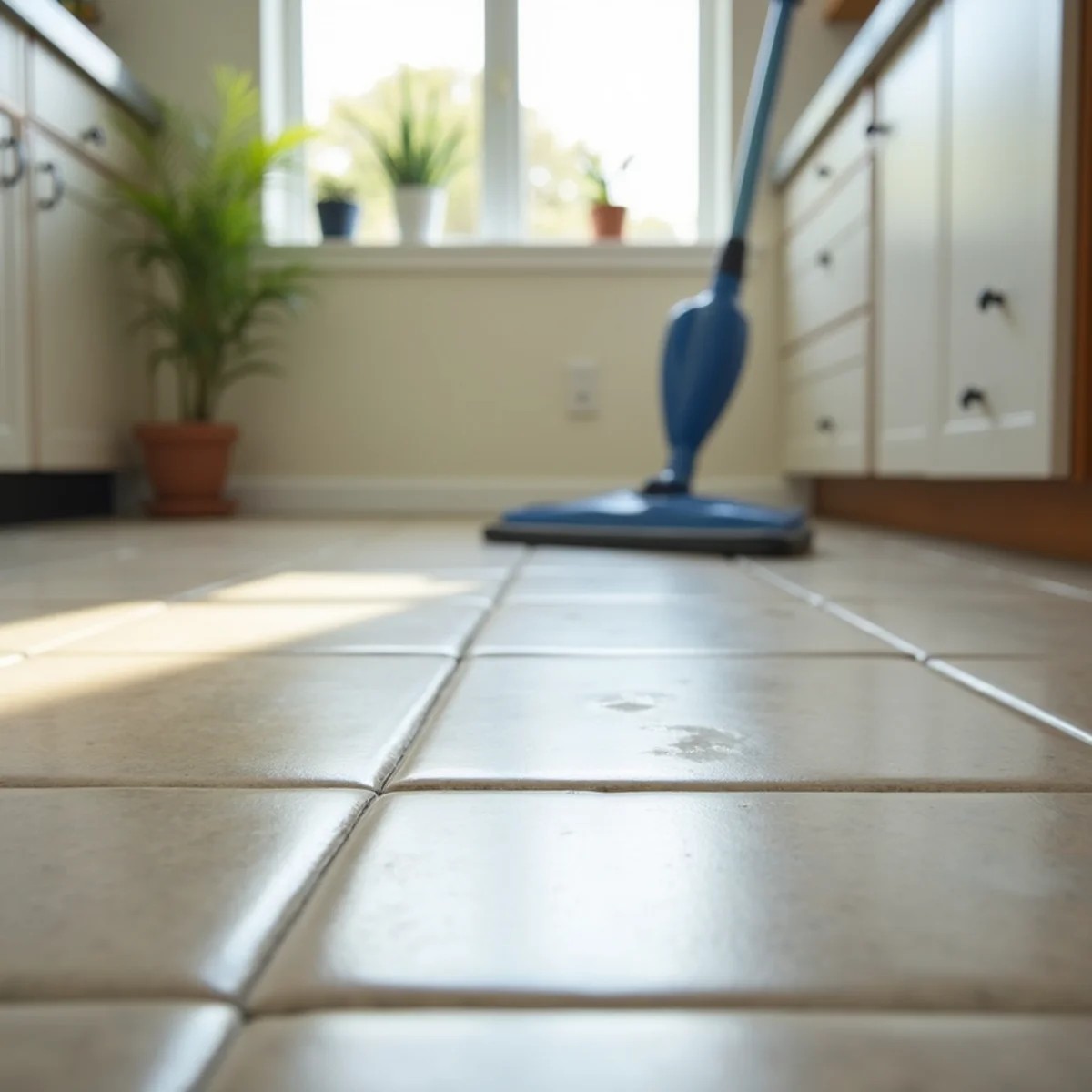
You mop the kitchen, the floor dries, and the grout lines still look gray and grimy. It's one of the most frustrating things about tile — and it's not because you're doing it wrong. It's because of how mopping and grout interact. Here's what's really happening on your Stockton floor and what it actually takes to get tile and grout looking new again.
The mopping problem: pushing dirty water into grout lines
A mop doesn't remove dirty water — it moves it around. As you mop, the dirt lifts off the tile surface into the water, and then that dirty water settles into the lowest point on the floor: the grout lines. The tile faces come clean because they're smooth and slightly raised, but the grout sits lower and porous, so it collects everything the mop pushes into it. Over time, mopping can actually make grout look worse.
Why grout traps grime (and why it goes gray)
Grout is porous — full of tiny pores that soak up water, grease, and grime like a sponge. Once dirt works into those pores, a mop can't pull it back out. That's why grout gradually darkens from its original color to a dingy gray, especially in high-use areas like kitchens and entryways where grease and Central Valley grit combine.
What household mopping can and can't do
The limits of store-bought grout cleaners and scrub brushes
You can improve grout at home with a stiff brush, a grout cleaner, and a lot of elbow grease — for a small area. The problem is scale and reach: hand-scrubbing an entire floor is exhausting, and store-bought cleaners plus a brush still can't flush grime out of the deeper pores. You'll get some improvement, but rarely a full restoration, and it doesn't last.
How professional tile and grout cleaning works
Deep cleaning the grout lines, not just the surface
Professional tile and grout cleaning uses high-pressure hot water and specialized solutions that break down the grease and grime packed into the pores, then extract it all at once — instead of pushing it around like a mop does. That's what lifts the gray out of the grout and restores it much closer to its original color. It reaches what hand-scrubbing simply can't.
Kitchens, bathrooms, and entryways
The rooms that benefit most are the ones that see the most action — kitchens with cooking grease, bathrooms with soap scum and moisture, and entryways that catch all the tracked-in dust. These are exactly the tile floors our repeat customers in Lincoln Village and Weston Ranch have us come back for, because that's where the difference is most dramatic.
Should you seal your grout after cleaning?
Yes — sealing is worth it. Once grout is deep-cleaned, a quality sealer fills the pores so dirt and liquids can't soak in as easily. That keeps the grout looking clean longer and makes your everyday mopping far more effective. It's the best way to protect the results of a professional clean.
Keeping tile cleaner between professional visits
A few simple habits stretch the time between professional cleanings:
- Wipe up spills and grease quickly before they reach the grout.
- Rinse your mop often and change the water when it gets dirty.
- Use a doormat to cut down on tracked-in Central Valley grit.
- Keep the grout sealed so grime stays on the surface.
A mop moves dirt around; it doesn't remove it. Grout only truly comes clean when the grime is flushed out of the pores and extracted.
If your grout looks gray no matter how much you mop, it's not a lost cause — it usually just needs a proper deep clean. We're licensed, insured, and stand behind every job with our 100% satisfaction guarantee.
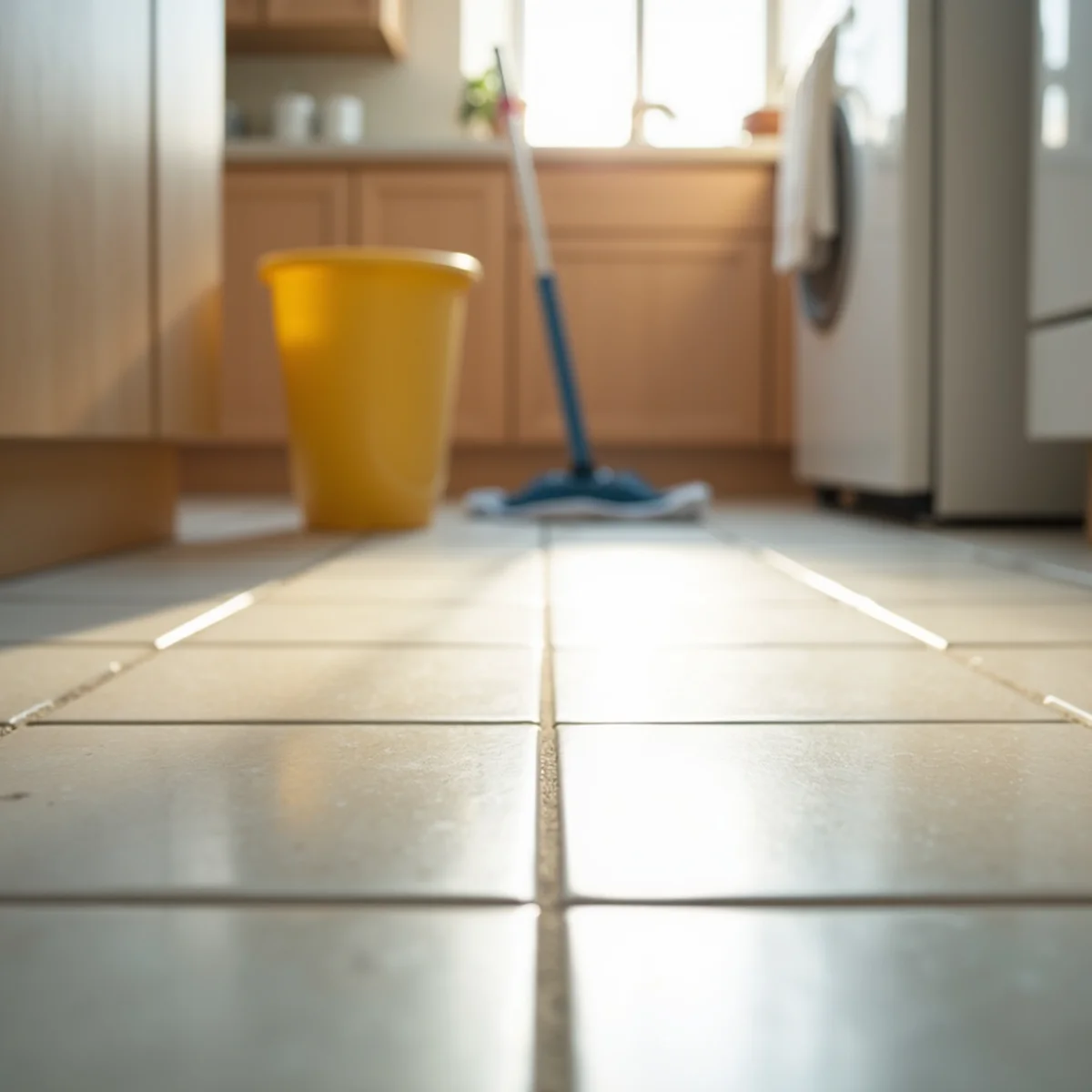
Once you understand that a mop pushes dirty water into the grout instead of removing it, the next question is the practical one: what are you actually doing wrong, and what should you do instead? A lot of the time it is not effort that is the problem. It is the product in the bucket, the water in the mop, and a couple of habits that undo the cleaning as fast as you do it. Here is the layer most homeowners never get told about, plus a few things that are not really dirt at all.
Common cleaners that actually damage grout over time
Grout is cementitious, which means it reacts to what you put on it. Reaching for the strongest bottle under the sink is one of the most common ways Stockton homeowners speed up the exact graying they are trying to fix. A few of the usual suspects work against you:
- Vinegar and acidic cleaners slowly dissolve the surface of cementitious grout, etching it so it holds dirt more easily and wears thinner every time you use them.
- Bleach can lighten a stain for a day, but over time it breaks down the grout and leaves it more porous, so it soaks up grime faster afterward and can discolor darker grout.
- Oil-based or wax-based floor cleaners leave a sticky film that grabs every speck of tracked-in Valley dust, which is why the floor looks cloudy again within days.
- Too much soap of any kind never fully rinses away, and that leftover residue is what re-soils the grout almost as soon as it dries.
Local tip: For everyday mopping, stick with a simple pH-neutral floor cleaner and go light on it. A pH-neutral formula lifts soil without eating into the grout or leaving a residue that attracts dirt, so your floor stays cleaner between professional visits.
How to actually mop tile so the grout stays cleaner
You cannot deep-clean set-in grime with a mop, but you can stop making it worse and buy yourself more time between deep cleans. The single biggest fix is refusing to spread dirty water around. A better routine looks like this:
- Sweep or vacuum first so you are not mopping loose Central Valley grit into the grout lines.
- Use two buckets, one with your pH-neutral solution and one with clean rinse water, so you are never dipping a dirty mop back into your cleaning water.
- Wring the mop until it is damp, not soaking, because standing water is what drains straight into the porous grout.
- Switch to a flat microfiber mop, which grabs and holds fine particles instead of smearing them across the tile the way a string or sponge mop does.
- Finish with a pass of plain clean water to rinse away any cleaner residue, then let the floor air-dry.
None of this restores grout that has already gone gray deep in the pores, but it does keep a freshly deep-cleaned floor looking good far longer, and it stops the slow decline that makes people think their tile is worn out when it is really just mistreated.
When the problem is not dirt at all
Sometimes you scrub and scrub and the floor still looks off because you are fighting the wrong thing. Two culprits are common in San Joaquin County homes, and neither responds to more mopping. The first is efflorescence, a chalky white or cloudy haze left behind when minerals from our hard Central Valley water are drawn up through the grout and dry on the surface. The second is mold or mildew, which shows up as dark or discolored grout in bathrooms, around showers, and anywhere moisture lingers. A white haze that wipes to nothing when damp but returns as it dries points to mineral buildup, while a musty smell and dark specks that keep coming back point to organic growth. Both need a targeted approach rather than another round with the mop bucket.
Local tip: Hard water is the norm across Stockton, Lodi, and Manteca, so a cloudy film on tile is often mineral scale rather than dirt. If wiping the area with a damp cloth makes the haze vanish and it reappears as the floor dries, that is efflorescence, and a professional tile and grout cleaning is the reliable way to clear it without harsh acids that damage the grout.
A clean floor is only as good as its seal
Even a perfect mopping routine has a shelf life if the grout is unsealed. Sealer is what keeps water, grease, and grime sitting on top of the grout long enough for you to wipe them away instead of soaking straight into the pores. The trouble is that sealer wears off with foot traffic and cleaning, and most homeowners have no idea when it happened. A quick check tells you a lot: drip a few drops of water onto a grout line and watch. If it beads up, your seal is doing its job; if it soaks in and darkens the grout within a minute or two, the seal is gone and every mop is feeding grime straight into the pores. That is the moment to have the grout professionally deep-cleaned and resealed so the results actually last.
Half the battle with tile is not scrubbing harder. It is not undoing your own work with the wrong cleaner, dirty water, and an unsealed grout line that drinks in everything you mop.
Rather leave it to the pros?
Supreme is locally owned, licensed and insured, and IICRC-certified, with a 100% satisfaction guarantee on every job. Get a free, no-pressure quote today.
Keep exploring
Frequently Asked Questions
Mopping moves dirty water around rather than removing it, and that water settles into the low, porous grout lines. Grout soaks up grime like a sponge, so regular mopping can actually darken it over time. Professional deep cleaning flushes the grime out of the pores and extracts it, restoring the color.
In most cases it can be restored, not replaced. Professional tile and grout cleaning lifts the embedded grime and brings the grout much closer to its original color. Sealing it afterward keeps it looking clean longer. Replacement is rarely necessary unless the grout is physically cracked or crumbling.
Yes — kitchens, bathrooms, and entryways are exactly where professional tile and grout cleaning makes the biggest difference. Those areas collect the most grease, soap scum, moisture, and tracked-in grit. We're happy to give you a free quote for any tiled space in your home.
It is fine on the glazed tile face but hard on the grout. Vinegar is acidic, and grout is cementitious, so over time the acid etches and dissolves the surface of the grout, leaving it thinner and more porous so it stains faster. For routine mopping, a pH-neutral cleaner is the safer choice, and for grout that has already gone gray, professional deep cleaning restores it without the damage.
A flat microfiber mop is the best pick for daily tile care because the fine fibers grab and hold soil instead of smearing it across the surface and pushing it into the grout the way string and sponge mops do. Wring it damp rather than soaking, and pair it with a two-bucket method so you are not dragging dirty water around. Even the best mop only maintains the surface, though, so periodic professional cleaning is still what lifts grime out of the grout pores.
That chalky haze is usually efflorescence, mineral deposits left behind as hard Central Valley water is drawn up through the grout and evaporates on the surface. It often wipes away when damp and reappears as the floor dries, which is the giveaway that it is mineral scale rather than dirt. Ordinary mopping will not solve it, and harsh acids can damage the grout, so a professional tile and grout cleaning is the reliable fix.
Do the water-drop test. Put a few drops of water on a grout line and watch: if it beads on top, your sealer is still protecting the grout; if it soaks in and darkens the grout within a minute or two, the seal has worn off. Once the seal is gone, every mopping pushes grime deeper into the pores, so that is the ideal time to have the grout deep-cleaned and resealed to keep it looking clean longer.
It can, especially on grout that is old, cracked, or no longer sealed. Steam forces hot moisture deep into the porous grout, which over time can loosen it and drive water where you do not want it. Professional truck-mounted hot water extraction is different because it applies controlled heat and pressure and then immediately extracts the water and loosened grime instead of driving moisture in and leaving it there.